IT Project Management
IT projects typically have long cycles, many participants, and complex documentation. Lack of systematic project management easily leads to schedule overruns, cost overruns, and substandard delivery quality. The IT Project Management module covers the full project lifecycle from justification to acceptance, integrating task breakdown, progress tracking, cost control, risk management, and document archiving on a single platform, making project processes transparent and traceable.
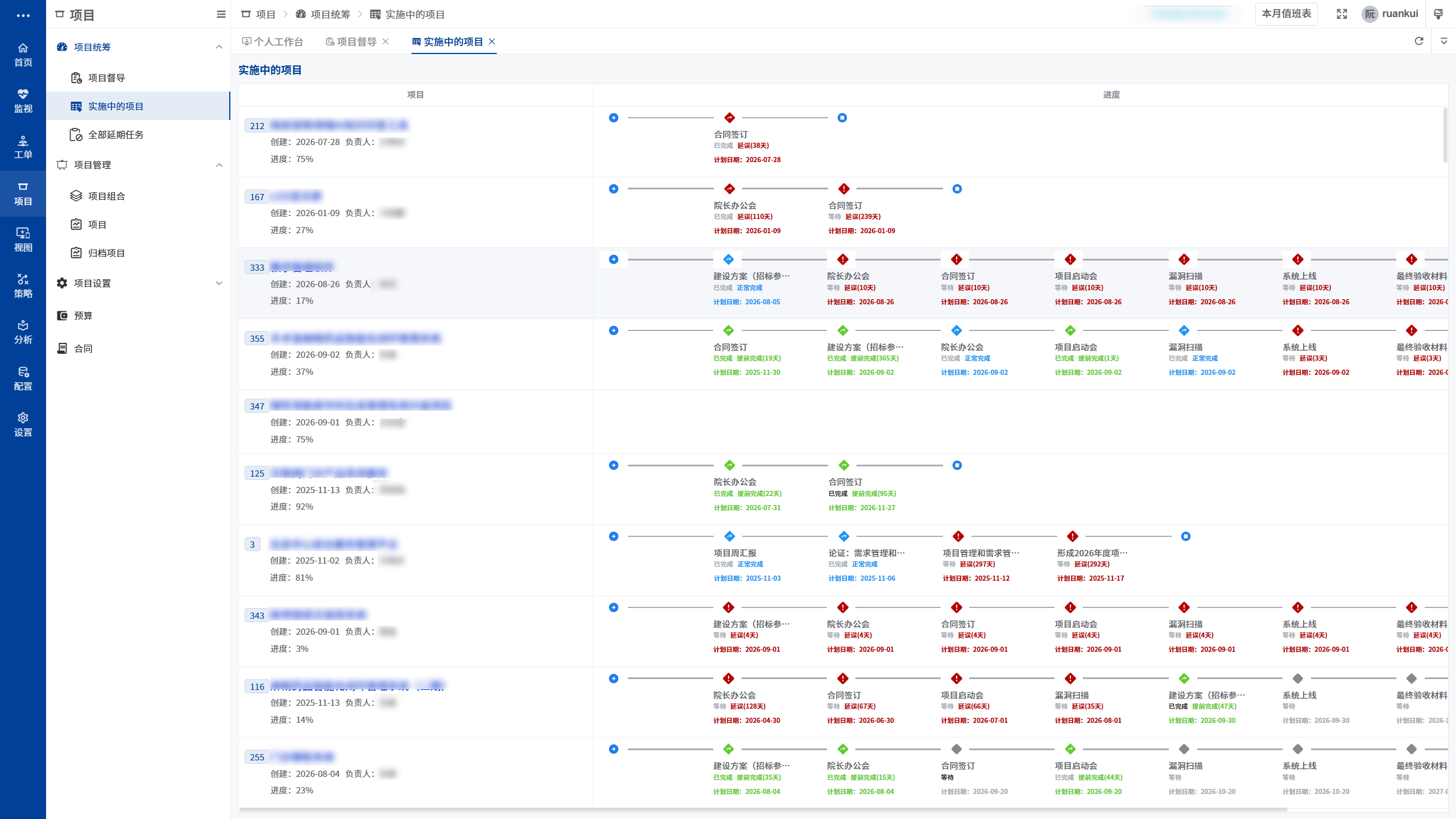
Full Lifecycle Management
The system manages IT projects by standard phases, ensuring each phase has clear deliverables and review gates.
- Justification Phase: Project initiation, feasibility analysis, budget submission and approval
- Design & Planning Phase: Requirements analysis, solution design, procurement plan, project scheduling
- Build & Implementation Phase: Task breakdown, progress tracking, resource coordination, quality management
- Acceptance & Delivery Phase: Acceptance testing, document archiving, asset registration, project review
Process Control
Key elements during project execution require continuous tracking and control to ensure on-schedule delivery.
- Task Breakdown & Scheduling: WBS task breakdown, Gantt chart display of project schedule
- Progress Tracking & Alerts: Real-time tracking of task completion, automatic alerts for delayed tasks
- Cost & Resource Management: Budget execution tracking, human and material resource allocation
- Risk Identification & Response: Project risk registry and response tracking, reducing project uncertainty
Document & Archive Management
IT projects generate large amounts of documentation. Standardized document management ensures project quality and knowledge transfer.
- Project Document Archiving: Unified archiving of requirements, design docs, test reports, acceptance materials, etc.
- Process Record Trails: Full-process trails of meeting minutes, change records, issue handling, etc.
- Acceptance Material Management: List-based management of acceptance materials to ensure delivery completeness
- Knowledge Reuse: Project experience and solutions deposited as organizational knowledge for future reference
Application Value
Systematic project management helps IT departments improve delivery capability, reduce project risk, and ensure return on investment.
- On-Time Delivery: Progress tracking and alerts expose delay risks early
- Cost Control: Budget execution tracking avoids overruns, improving ROI
- Quality Improvement: Phase reviews and document standards ensure delivery quality
- Organizational Capability: Project knowledge deposition enables continuous learning and maturity improvement